Boost the performance of your WordPress site by optimizing your images and videos with the Cloudinary WordPress Plugin. WordPress developers, content creators, and administrators can efficiently create, manage and deliver images and videos. The plugin scales from individual blogs to enterprise sites that deliver hundreds of thousands of images and videos and that need to be accessed across a variety of devices.
What can Cloudinary do for you?
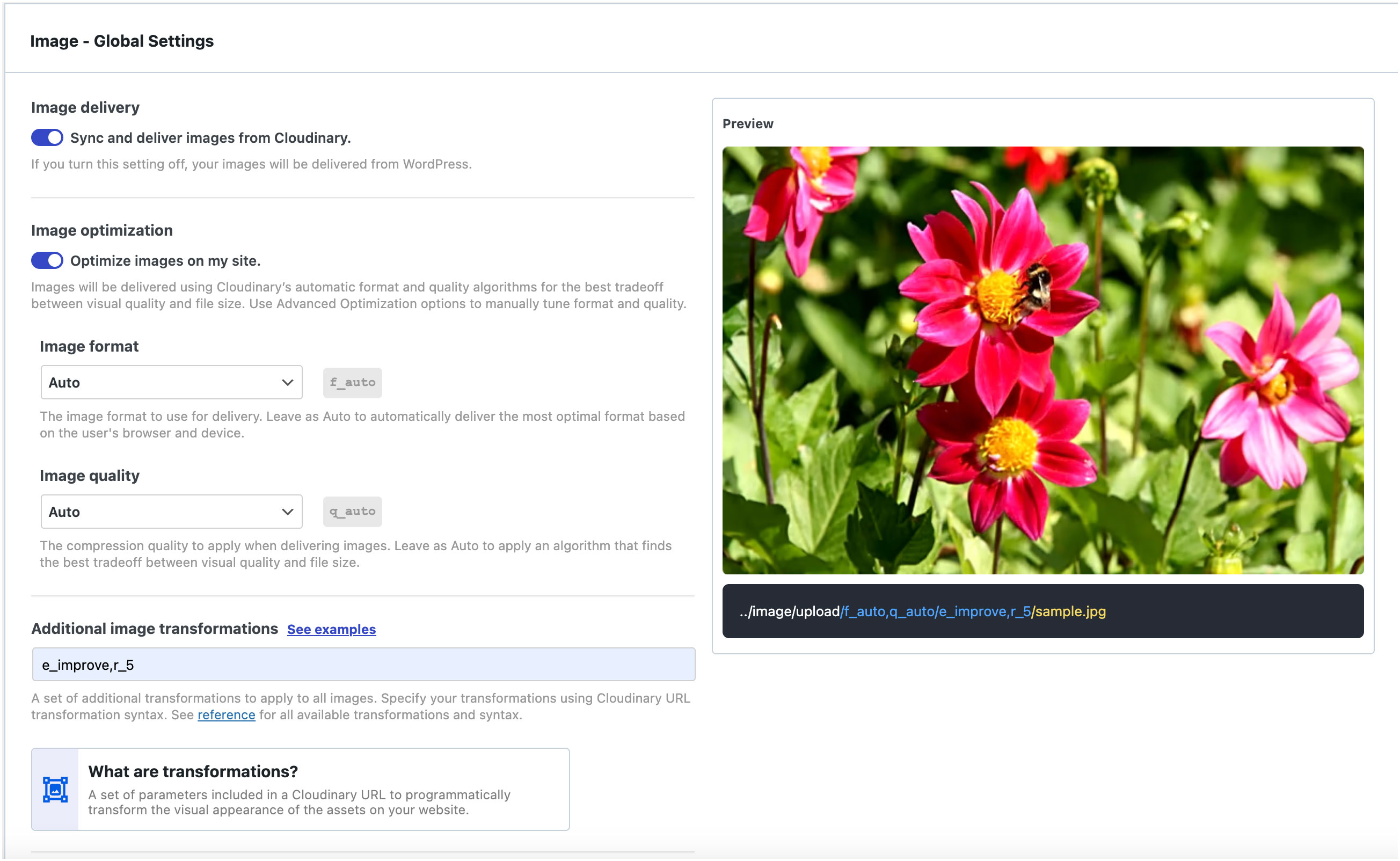
Automatically optimize and transform all your new and existing images and videos through best-in-class algorithms that improve site performance and SEO rankings. Check out some examples!
Rapidly edit assets, via AI, that deepen engagement through capabilities such as smart cropping, thumbnail generation, automated transcoding, and more.
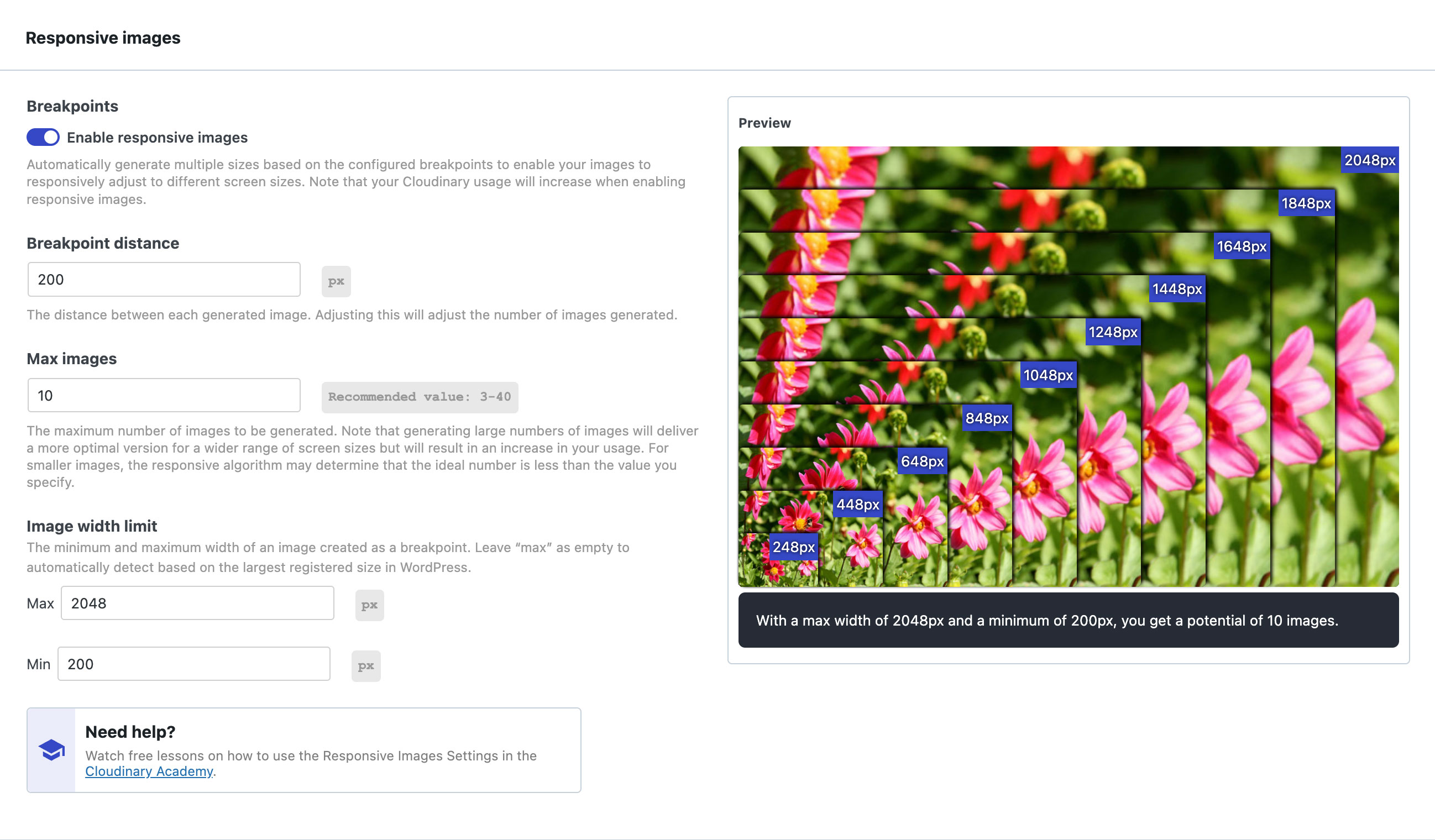
Deliver dynamically created responsive images across various devices and different resolutions.
Utilize lazy loading and customizable placeholders to load images that are viewed by your users.
Support both headless and UI-based WordPress deployments, maintaining flexibility in website development.
Maintain compatibility with popular page builders.
Provide end-to-end support for the WooCommerce plugin.
Stream videos using the Cloudinary Video Player, featuring advanced capabilities to enhance user engagement.
Present a responsive and interactive Product Gallery for creating captivating visual experiences.
About
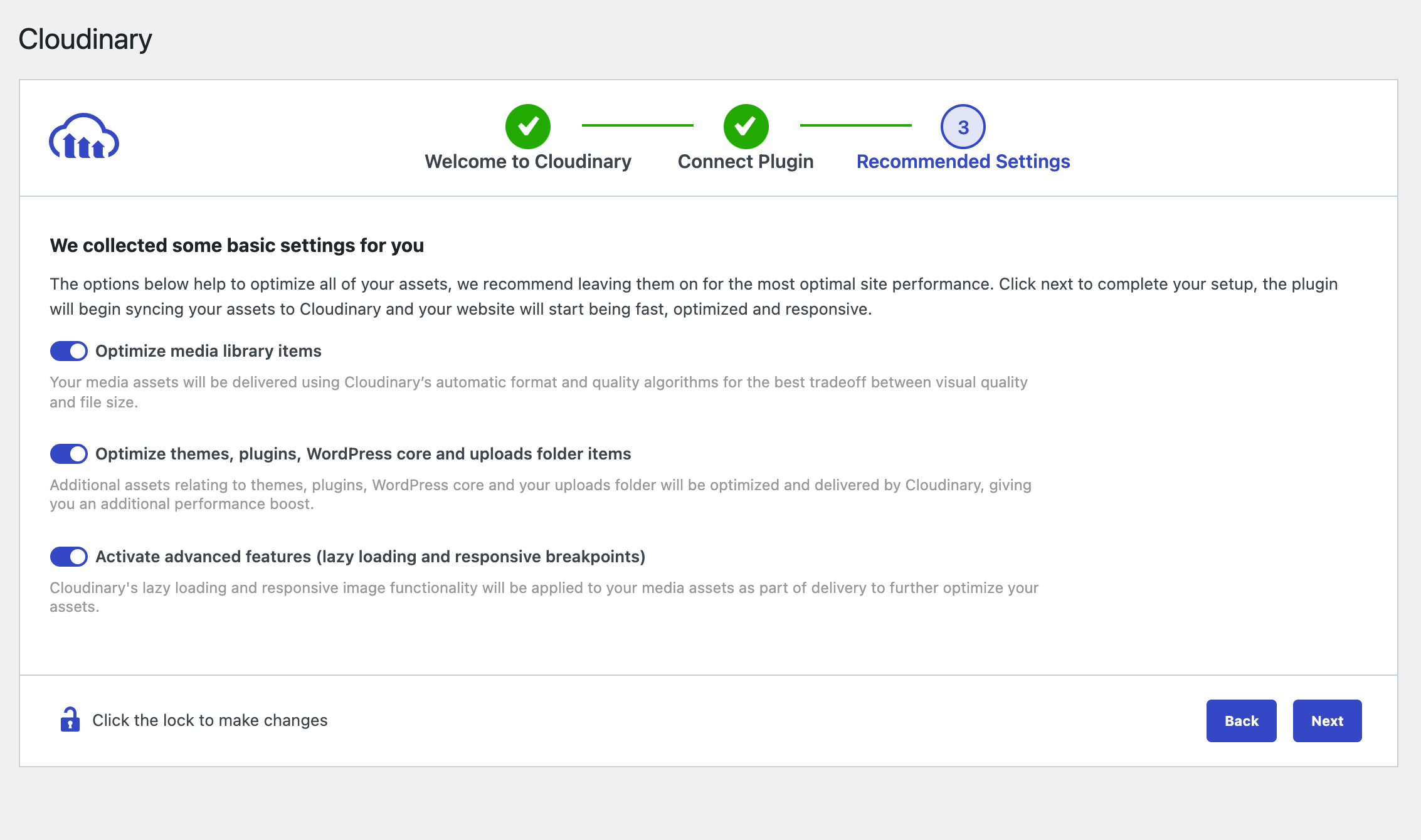
Cloudinary’s award-winning plugin makes automating your image and video workflows easy, offering a variety of features. Supporting nearly two million developers and over 10,000 customers, Cloudinary enables companies to manage, transform, optimize and deliver image and video assets. The Cloudinary Plugin supports all these capabilities, providing users with a true plug-and-play solution. Getting started takes only minutes using the intuitive onboarding wizard.
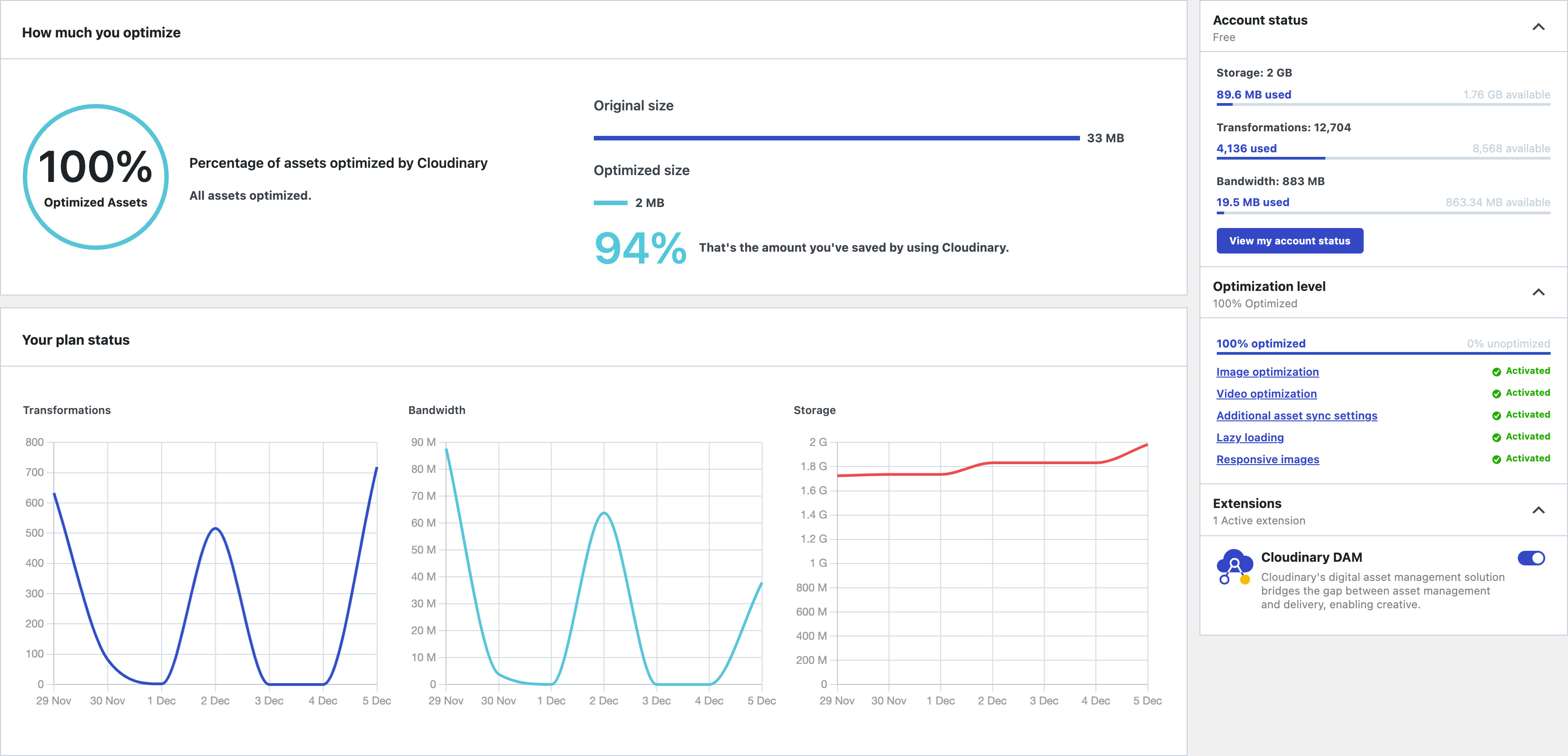
After deployment, users can access a dashboard that provides insights into optimization metrics and data usage. The Cloudinary Plugin is based on an architecture that supports any type of site including business, enterprise and personal.
Optimize your site performance and user experience by achieving faster page load times and implementing advanced auto-responsive delivery. This not only improves your Google page rankings but also enhances Core Web Vitals, and Lighthouse scores. By leveraging features such as video and image optimization, advanced responsive design, customizable lazy loading, and built-in CDN support, you can publish content faster while consistently delivering engaging user experiences. The Plugin supports both headless and UI-based development models, and allows you to customize development and extend functionality with the Cloudinary Plugin actions and filters. Moreover, you can create engaging visual experiences with automated quality and encoding settings, video and image resizing and cropping via AI, comprehensive transformations and effects, and seamless delivery to any device in any resolution or pixel density.
Getting Started
To use the Cloudinary Plugin and all the functionality that comes with it, you will need to have a Cloudinary Account. If you don’t have an account yet, sign up now for a free Cloudinary Programmable Media account. You’ll start with generous usage limits and when your requirements grow, you can easily upgrade to a plan that best fits your needs. Upon account creation you can plug in your account credentials and customize your configurations as desired. That’s it.
Do I need a Cloudinary account to use the Cloudinary plugin and can I try it out for free?
To use the Cloudinary plugin and all the functionality that comes with it, you will need to have a Cloudinary Account. If you don’t have an account yet, sign up now for a free Cloudinary Programmable Media account. You’ll start with generous usage limits and when your requirements grow, you can easily upgrade to a plan that best fits your needs.
I’ve installed the Cloudinary plugin, what happens now?
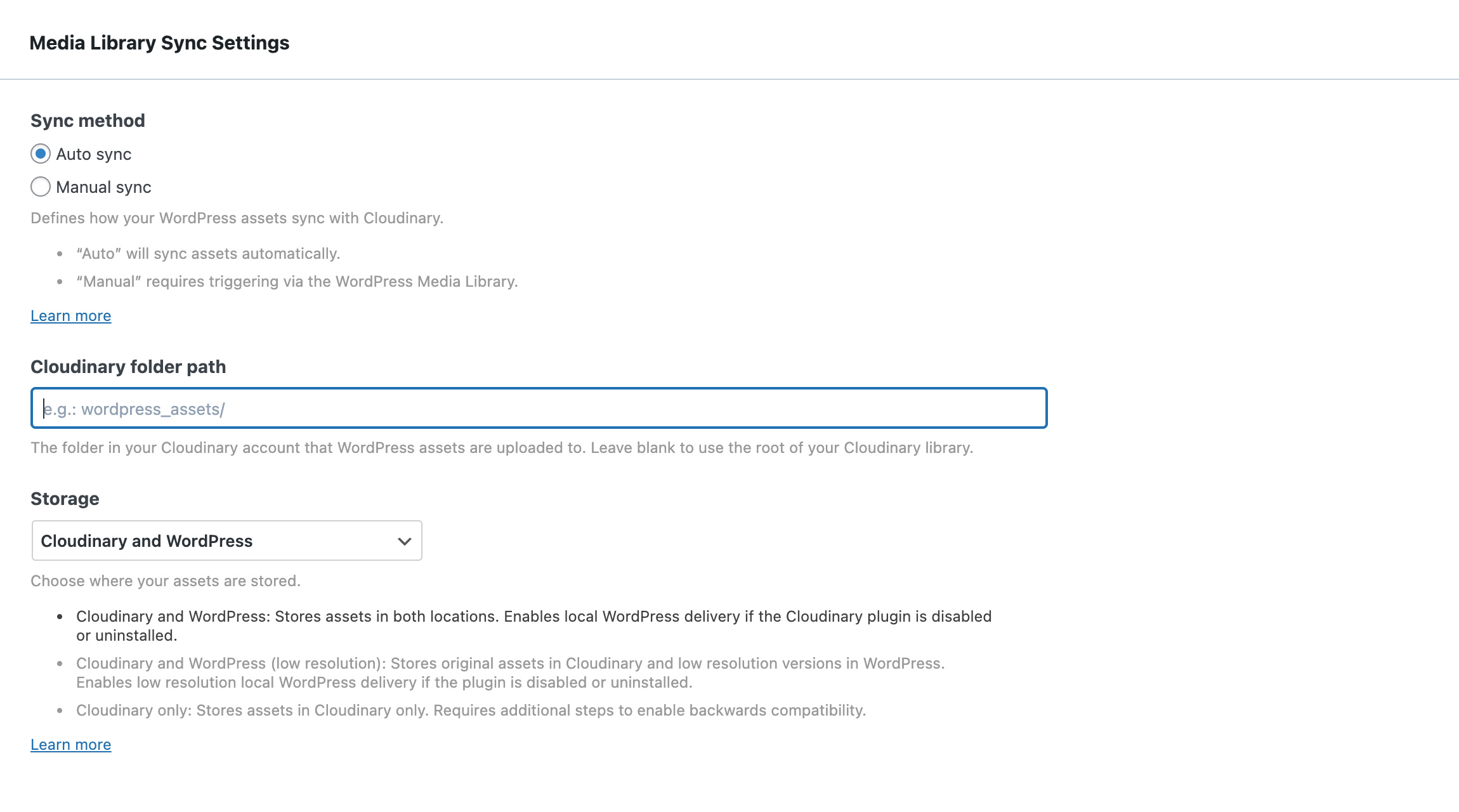
If you left all the settings as default, all your current media will begin syncing with Cloudinary. Once syncing is complete, your media will be optimized and delivered using Cloudinary URLs and you should begin seeing improvements in performance across your site.
Which file types are supported?
Most common media files are supported for optimization and delivery by Cloudinary. For free accounts, you will not be able to deliver PDF or ZIP files by default for security reasons. If this is a requirement, please contact our support team who can help activate this for you.
To deliver additional file types via Cloudinary, you can extend the functionality of the plugin using the actions and filters the plugin exposes for developers
Does the Cloudinary plugin require an active WordPress REST API connection?
To function correctly, the Cloudinary plugin requires an active WordPress REST API connection. Ensure your WordPress setup, including multisite or headless configurations, has the REST API enabled and active for seamless plugin operation.
Absolutely! Cloudinary is fully compatible with WPML, the leading WordPress multilingual plugin, and is officially recommended for seamless media management across multiple languages. Cloudinary ensures that your media assets are efficiently handled on your multilingual site. For more details, visit WPML’s official page on Cloudinary compatibility.
I’m having an incompatibility issue with a theme, plugin, or hosting environment, what can I do?
We’re compatible with most other plugins so we expect it to work absolutely fine. If you do have any issues, please contact our support team who will help resolve your issue.
Can I use the Cloudinary plugin for my eCommerce websites?
Yes, the Cloudinary plugin has full support for WooCommerce. We also have additional functionality that allows you to add a fully optimized Product Gallery.
Why are my images loading locally and not from Cloudinary?
Your images may be loading locally for a number of reasons:
The asset has been selected to be delivered from WordPress. You can update this for each asset via the WordPress Media Library.
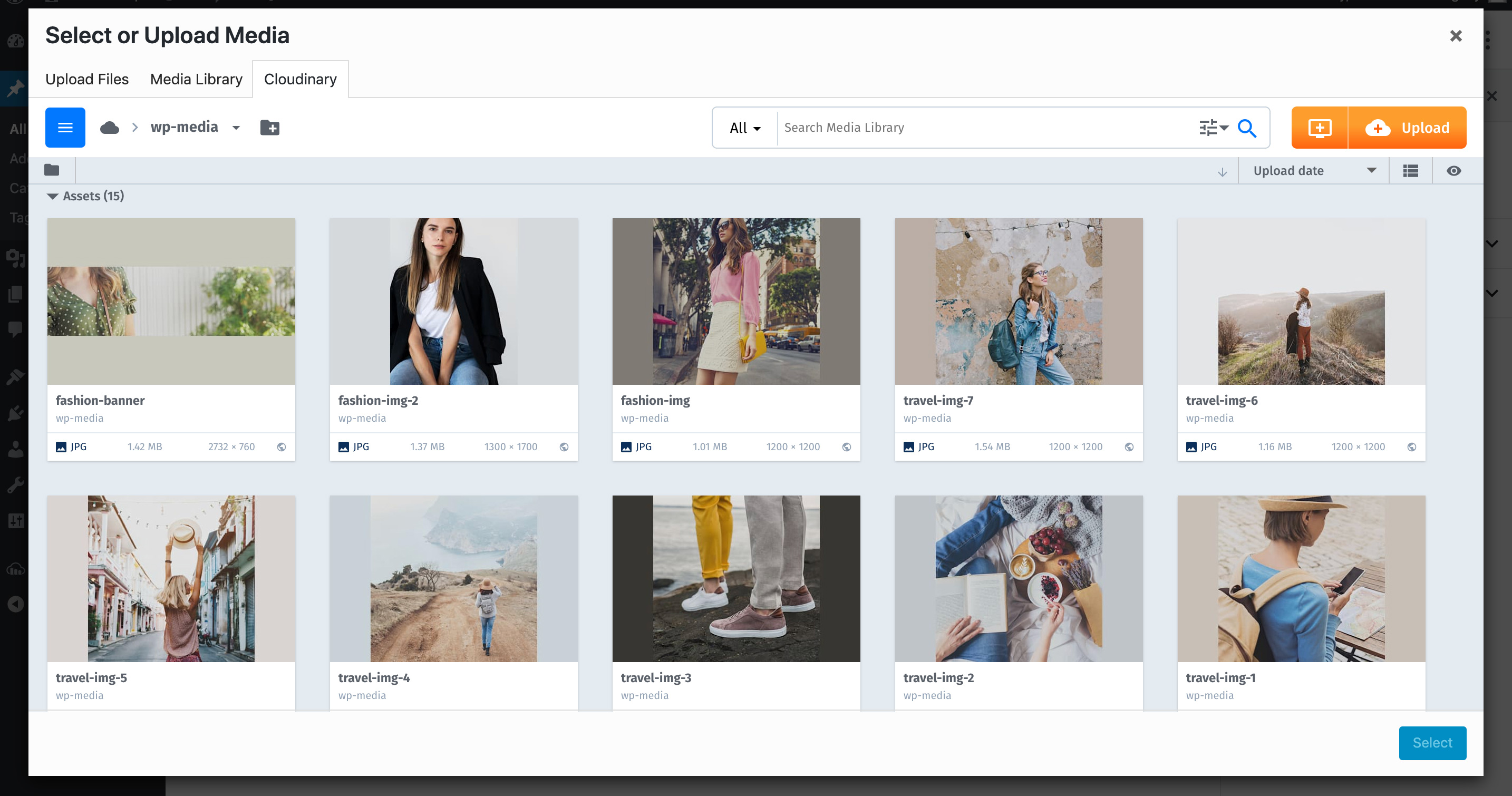
Your asset is stored outside of your WordPress storage.
The asset is not properly synced with Cloudinary. You can find the sync status of your assets in the WordPress Media Library.
How do I handle a CLDBind error which is causing issues with lazy loading?
The Cloudinary lazy loading scripts must be loaded in the page head. Ensure your site or any 3rd party plugins are not setup to move these scripts.
Fixed failed DAM downloads being reported as successful and creating empty Media Library attachments. Failed imports now return an error and are logged
Fixed an issue where crops and effects applied in the Cloudinary DAM widget were lost when assets were imported into WordPress
Added automatic thumbnail regeneration after images are edited in the WordPress image editor, eliminating an extra database query on every page load
Fixed a synchronization loop that could overload the server
Fixed deprecation warnings on recent PHP versions and an issue with caching delivery URL lookups
Added Cloudinary URL support to wp_get_attachment_image_src(), so themes and plugins using this function receive Cloudinary-delivered URLs
3.3.8 (23 September 2026)
Fixes and Improvements:
Improved: Updated WPML compatibility to support WPML 5.0
Fixed: Uploading a file with the same filename as an existing Cloudinary asset no longer overwrites the existing asset
3.3.7 (27 August 2026)
Fixes and Improvements:
Fixed an issue that prevented the Media Library Widget from loading. Thanks to @eugenepg for the contribution
3.3.6 (25 August 2026)
Fixes and Improvements:
Fixed an issue that could disrupt the Novamira MCP integration by ensuring JSON responses retain their expected structure
Updated JavaScript dependencies to improve security, stability, and development tooling
Added compatibility with WordPress 7.1, including support for block editor and Gallery settings updates
Fixed an issue where non-crop WordPress image sizes could be delivered with distorted dimensions. Thanks to @airbuzz for the contribution
3.3.5 (20 July 2026)
Fixes and Improvements:
Behind-the-scenes data handling improvements
3.3.4 (24 June 2026)
Fixes and Improvements:
Cloudinary fields on taxonomy term edit pages can now be collapsed
Improved the styling of the deactivation feedback form and made the Skip and deactivate option more
prominent
Resolved deprecation warnings when running on PHP 8.4
Fixed an asset synchronization issue that could result in duplicate assets being created
Fixed a fatal error that could occur during plugin activation in certain environments
Fixed an Elementor regression that caused dynamic background images to display the same image across all posts
3.3.3 (29 April 2026)
Fixes and Improvements:
Minor bug fixes and performance improvements
3.3.2 (23 February 2026)
Fixes and Improvements:
Added AVIF as a selectable image format in the Image Optimization settings
Fixed a PHP warning caused by an incorrect relative path in class-media.php
Removed the legacy PHP 5.6 GitHub Action from CI to align with currently supported PHP versions
3.3.1 (05 February 2026)
Fixes and Improvements:
Refreshed the user interface for the Crop and Gravity feature
Standardized permission_callback handling across all REST endpoints, enforcing capability checks and default nonce validation
Improved lazy-load logic by normalizing DPR values to reduce unnecessary derived asset generation
Fixed issues with front-end background images from page builders when assets aren’t delivered via Cloudinary
Improved deletion handling for Cloudinary parent assets
3.3.0 (14 January 2026)
Fixes and Improvements:
Introduced a new Transformation Effects column, replacing the previous Transformations column. Transformation Effects now includes the transformation field as well as image overlays and text overlays
Added a new Crop and Gravity feature (beta), available under Image Settings and directly on individual images within the WordPress Media Library
Replaced legacy sample image and video with updated assets
Minor bug fixes and general improvements
3.2.14 (22 October 2025)
Fixes and Improvements:
Upgraded dependencies: form-data and @babel/traverse packages updated for improved stability and security
Improved SQL queries for enhanced compatibility and performance with WP Engine environments
Improved initialization performance by optimizing the sanitize_slug method usage to reduce unnecessary processing
Fixed incompatibility causing broken media URLs when JetEngine dashboard styles loaded inline SVGs
3.2.13 (17 September 2025)
Fixes and Improvements:
Fixed a PHP warning on the Reviews page when using Tags with Customer Reviews for WooCommerce
Fixed a conflict with the RankMath SEO plugin
Fixed an issue with ignored SVG support. The plugin now preserves SVG format for synced Cloudinary assets
Fixed print_script_data to prevent errors on the WordPress login page
Fixed additional asset sync issues with the Disable/Remove functionality
Fixed syncing issue with WebM audio files
Fixed an issue where the Classic Editor incorrectly attempted to generate responsive breakpoints for audio files
3.2.12 (12 August 2025)
Fixes and Improvements:
Added a filter to remove dns-prefetch or preconnect for improved resource loading control
Reduced SQL queries that were causing performance spikes, resulting in better overall performance
Fixed assets to sync automatically upon plugin updates
3.2.11 (30 June 2025)
Fixes and Improvements:
Cron jobs now disabled by default to reduce unnecessary requests
Updated REST API in FAQ to support enabling/disabling the cron jobs
3.2.10 (24 June 2025)
Fixes and Improvements:
Upgraded the Cloudinary Video Player to v3.0.2
3.2.9 (24 June 2025)
Fixes and Improvements:
Upgraded the Cloudinary Video Player to v3.0.1
Improved cronjob stability with a new “enabled by default” check
Fixed a relationship table issue affecting the Timber theme
3.2.8 (04 June 2025)
Fixes and Improvements:
Minor bug fixes and improvements
3.2.7 (06 May 2025)
Fixes and Improvements:
Upgraded the Cloudinary Video Player to v2.3.5
Reduced excessive REST API calls
Fixed a compatibility issue with the Next Bricks page builder
Resolved an Uncaught DivisionByZeroError related to breakpoints
Fixed an overlay issue where granular position control on the X and Y axes was not respected
Fixed an error related to rest_request_before_callbacks
3.2.6 (24 March 2025)
Fixes and Improvements:
Fixed debug warning message in class-media.php on line 1941
Resolved certain block validation errors in the Block Patterns UI
Fixed an issue with rendering interactive 3D GLB formats
3.2.5 (19 February 2025)
Fixes and Improvements:
Fixed issue where the smallest image was not being generated by responsive breakpoints
Resolved deprecation notice appearing on every page in PHP 8.0+
Updated FAQ to include details on our new WPML compatibility
3.2.4 (14 January 2025)
Fixes and Improvements:
Upgraded the Cloudinary Video Player to v2.2.0
Fixed image block validation errors in the Block Patterns UI
Resolved image block error messages that required recovery
De-registered all Cloudinary cron jobs when deactivating the plugin
3.2.3 (03 December 2024)
Fixes and Improvements:
Resolved broken dependencies on WordPress 6.7
Fixed a file existence check that caused a plugin crash
Addressed an issue preventing the activation of the crop and gravity beta feature at the asset level
Fixed the timing of when translations are loaded to comply with updated WordPress initialization requirements
3.2.2 (28 October 2024)
Fixes and improvements:
Clarified the concept of global transformations across plugin settings and post types
Improved CLI sync reliability
Fixed PDF files not showing as embedded from the media library
Added compatibility for password-protected websites
3.2.1 (18 September 2024)
Fixes and improvements:
Added Cloud name and plan information to the Dashboard and sidebar
Improved the wizard workflow and enhanced security
Fixed several PHP errors
3.2.0 (03 September 2024)
Fixes and improvements:
Added an option to resolve Cloudinary sync errors, accessible both from the Cloudinary dashboard and the WordPress media library
Introduced a new $29/month Small Plan for free users looking to enhance their Cloudinary experience
Fixed an issue with sitemaps that caused the duplication of query strings
3.1.9 (29 July 2024)
Fixes and improvements:
Added support for WPML
Updated the Wizard with new instructions for obtaining the Cloudinary API key
Fixed issue with downloaded fragments not being deleted
3.1.8 (25 March 2024)
Fixes and Improvements:
Added the Cloudinary for WordPress Administrators course as part of the plugin need help section
Added individual “Need Help? Watch Lessons Here!” call-outs at the top of every section as a tool tip, pointing to specific lessons where that section is covered
Updated the FAQ section
Upgraded the Cloudinary Video Player to v1.11.1
Fixed Cloudinary\tmpfile() undefined error log when importing assets from Cloudinary